Last change merged 30 Oct 2026, into Go compile instrumentation

I’m Saharsh, a computer science student at VIT Pune, an open source contributor and a builder. I like systems, AI and the tools other developers build with.

Engineering in motionScroll20 merged · 11 live · Pune · drag the nodes
02

In my own voice

Ask the box at the top, or press play. Every answer is me, spoken into Wispr Flow on 3 November, not a voice made by a model. Flow wrote the words down too. Where it misheard a name, like OpenTelemetry, I put the name right.

  1. Who are you?

    0:25

    I'm Saharsh, a second year computer science student at VIT Pune. Most evenings I am doing one of two things: making someone else's code cost less, or building something new you can actually open. Twenty of my changes are merged into open source projects like OpenTelemetry, and eleven things I built are live right now. And my favourite three are the things you can talk to.

  2. What is a chance you took?

    0:31

    In my first year, I started sending changes to OpenTelemetry, code that big companies run in production. As a student nobody there knew. I had no idea if anyone would even read them. My first one merged in February. Twenty have gone since. The best one, in a Kubernetes project, took something that grabbed memory 421 times on every run, and I brought it down to two.

  3. What is a mistake you learned from?

    0:30

    In August, I found out my own resume was wrong. It called one pull request merged when it had been closed, and two open ones finished. So I checked every number on it against GitHub, fixed it, and wrote a small check that asks GitHub before my site changes. On the second of November, it caught four changes that had merged while my site still called them open. I don't trust my memory now. I check.

  4. What do you care about?

    0:24

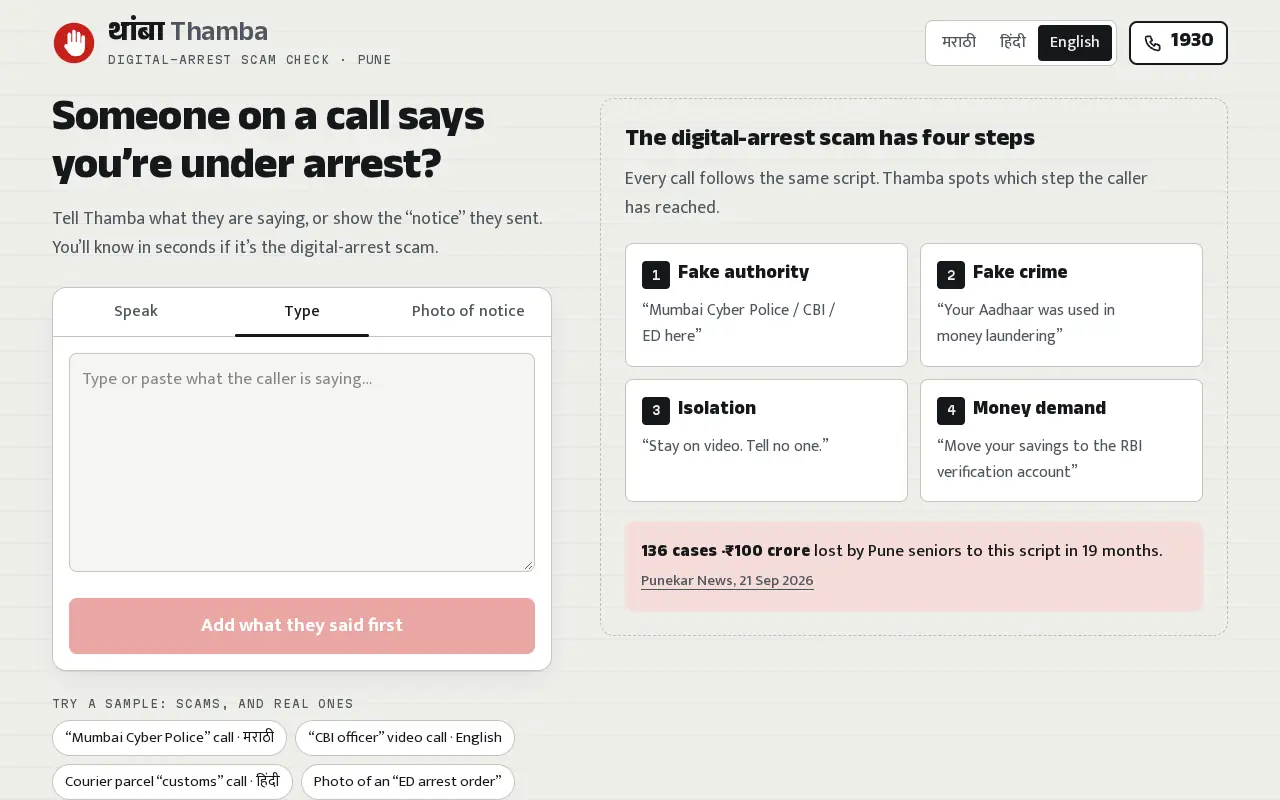
    I care about building for people who aren't technical. One of my projects, Thamba, is for older people in Pune who get digital scam calls. You say or type what the caller is claiming, and it shows which step of the scam they've reached. It's available in Hindi, English or Marathi. That's what I want to make: something a real person can use in the exact moment they need it.

  5. How do you think?

    0:23

    When I start something, I first find the one moment a person actually needs it. Then I build the smallest thing that works in that moment and put it live. Then I check every claim on it, because something that overstates itself loses people faster than something plain. Rollcall, for example, has never called a real clinic, and it says so right on the page.

  6. Why Wispr Flow, and why growth?

    0:24

    Three of my projects are built around voice, so I've seen how much more of a person comes through when they talk. To me, growth is the same job as building: find the moment someone needs a thing and get it in front of them. A lot of people in India already send voice notes instead of typing. I want to help them do that everywhere, with Flow.

03

Selected work

Three things I built that are live right now, each one something you talk to. Open any of them.

01

Voxmorph

Live, built at AssemblyAI Voice Hackathon Week, September 2026

Say one thing once and get it written five ways, for your boss, your team, your users, your engineers and your family.
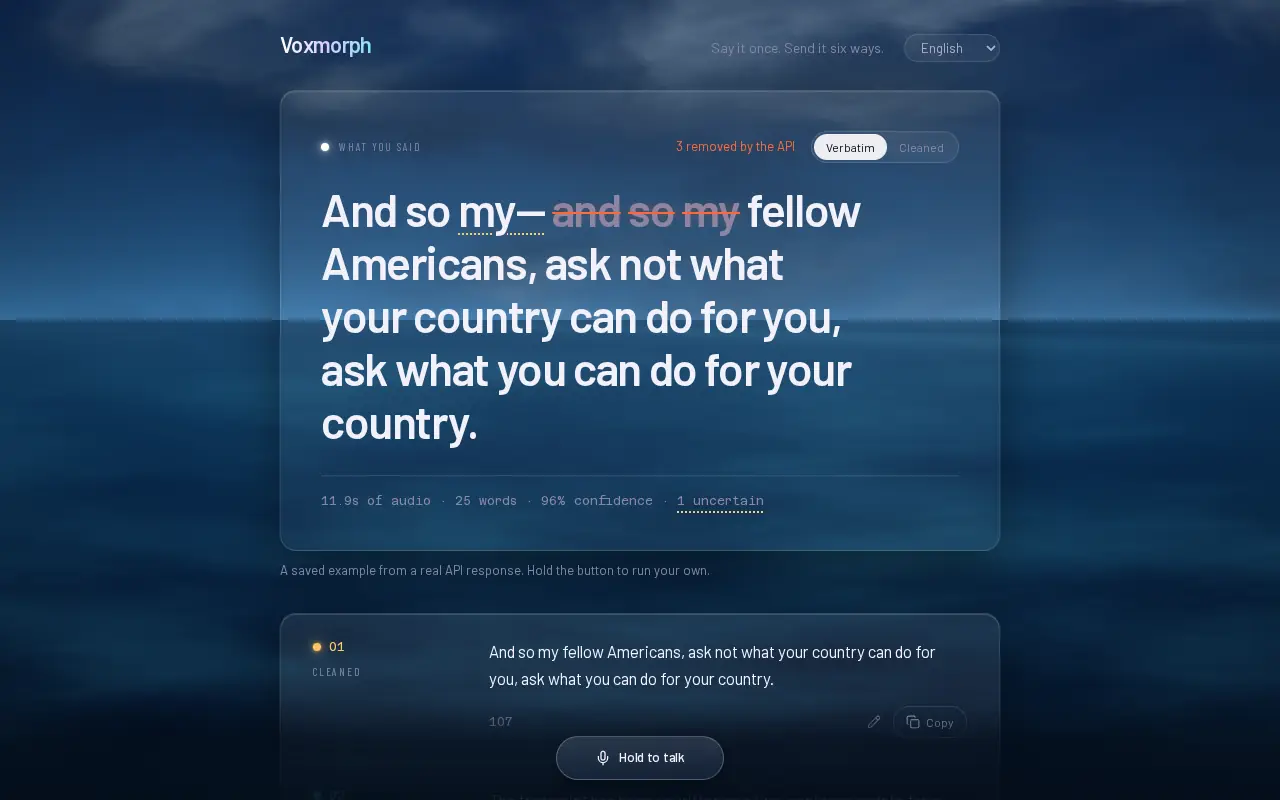
Voxmorph as it looks today

The problem

One update has to be said five different ways to five different people.

What I built

  • One recording sent six times at once, each with a different instruction
  • The words AssemblyAI's own cleanup removed are struck out, not guessed by a list
  • Name any other audience and get a version for them from the same recording
  • AssemblyAI Dictation API
  • TypeScript
02

Rollcall

Live, built at AssemblyAI Voice Agent Hackathon, September 2026

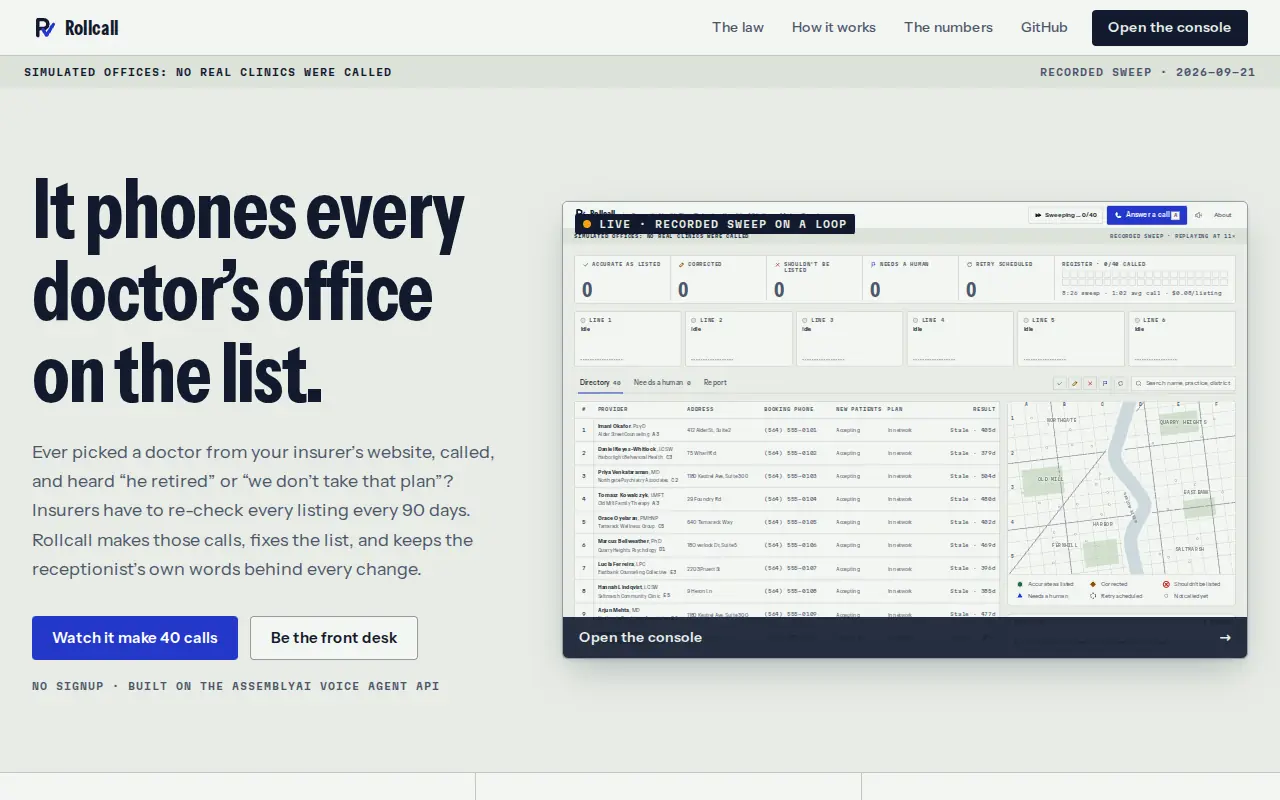
It phones every doctor's office on a health plan's list, fixes the list, and keeps the clip behind every change.

Rollcall as it looks today

The problem

Plan directories list doctors who moved, closed or stopped taking patients, and checking them is a call centre asking the same five questions.

What I built

  • One click and six lines dial forty offices, each call checking five facts in three questions
  • Every corrected cell shows the old value struck through, and you can hear the clip behind it
  • An unsure answer goes to a person with the clip, never written down as a guess
  • Answer a call in the browser and play the front desk yourself

Every office is simulated. No real clinic was called.

  • AssemblyAI Voice Agent API
  • TypeScript
03

Thamba

Live, built at Hack for Humanity: Pune, September 2026

A second opinion for older people in Pune, in the middle of a digital arrest scam call.

Thamba as it looks today

The problem

Scammers keep a victim on video, alone, until the money moves. Pamphlets help before the call and helplines after it.

What I built

  • Speak or type what the caller is saying, or photograph the warrant they sent
  • It shows which step of the scam script they have reached
  • It speaks the verdict in Marathi, Hindi or English, with one tap calls to family and the 1930 helpline
  • A rules engine decides on its own; the model can add a warning but never remove one
  • Gemini
  • Web Speech
  • Vercel Functions
04

Building now

Three things in progress. None is public yet, so each says what I am building and nothing more.

In progress

DEADMAN

A kill switch for AI agents that hold a wallet.

  • Spending caps and hourly limits on a smart account
  • Allowlists and slippage limits
  • A freeze that stops everything
  • Every transaction simulated and attested first
In progress

JunkSnap

Report a pile of waste with a photo and see it get cleared.

  • Computer vision finds the waste
  • Neighbours confirm the report
  • Tracked in the cloud until it is cleared
In progress

Certificate Verification

Check a certificate is real with one scan.

  • Hash and issuer on chain
  • Files on IPFS
  • QR verification and revocation

Solidity · Hardhat · IPFS · React · Sepolia

Also live, and yours to open

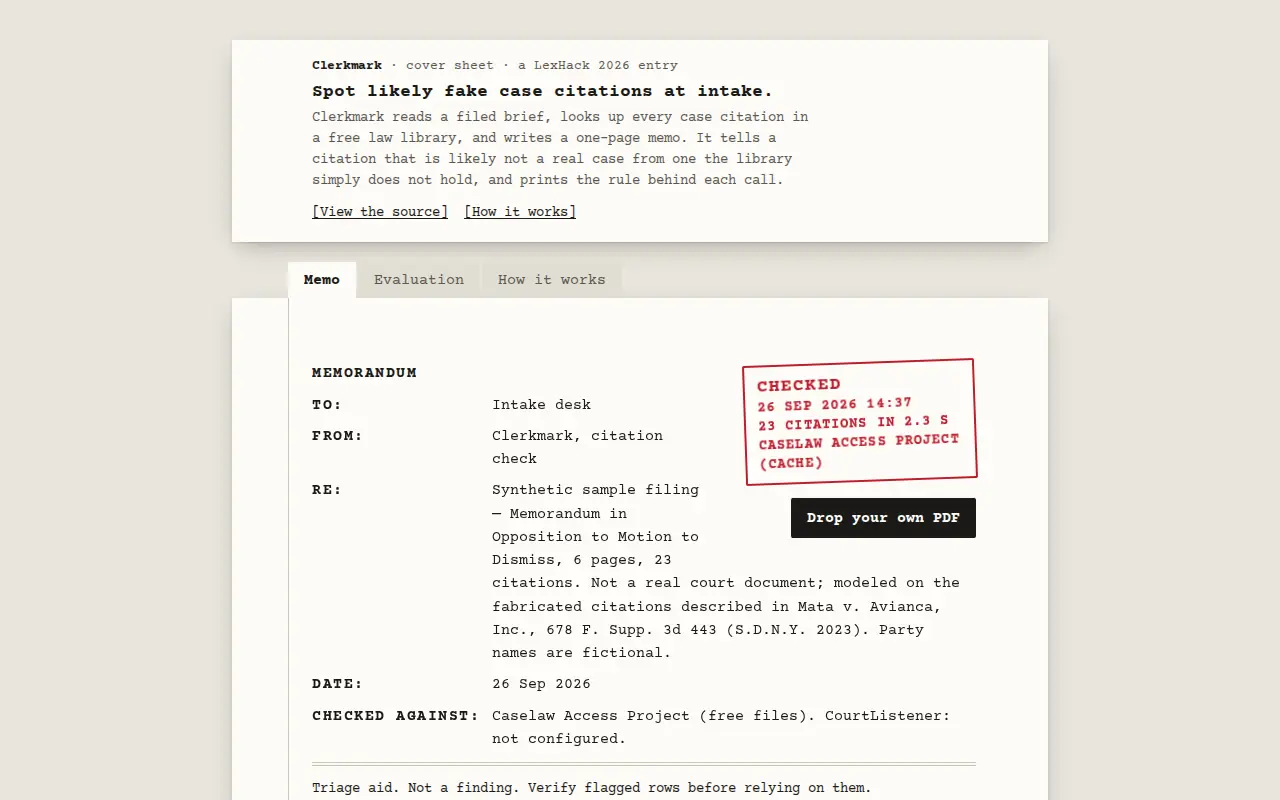
  1. ClerkmarkMarks up every case a court filing cites so intake staff know which to check first, without confusing a probably invented case with a real one the free library does not hold.LexHack 2026OpenSource
  2. CountersignCounts exactly what a change will delete from a database, and proves the undo, before anyone can approve it. The live demo replays a recorded run.The Agent Harness Hackathon, August 2026OpenSource
  3. RecallIndiaKeeps checking India's drug regulator and three American recall feeds, and matches each notice against the things a household says it owns.WeMakeDevs and AWS First Commit, September 2026OpenSource
  4. Dead StateFinds the order of ordinary moves that leaves an AI written quest impossible to finish, and shows the path there.Cambridge x Arcade AI Hackathon 2026OpenSource
  5. CalltreeWhen a heat warning is issued, it works through a town's register of isolated elderly people and sends a person only to those who need one. The demo runs on 100 invented residents.AWS Zero to Shipped 2026OpenSource
  6. Canary MazeShows when one bot reads something on your site and passes it on to another. The handoff in the demo was staged with two test bots.Side projectOpenSource
  7. Crossing WatchA verdict for each crossing that floods in Juja, Kenya: cross, wait or take another road. It replays a real storm from March 2026 and has not been tried with riders yet.Side projectOpenSource
  8. RegradeSorts youth football teams into bands by their results and fits the new fixtures into the pitches a league actually has. Tried on an invented league so far.Devpost Build With AI: BasicsOpenSource
05

Open source

20 changes merged by maintainers, most of them in OpenTelemetry, the project programs use to report what they are doing. The Cloud Native Computing Foundation moved it to Graduated, its highest level, on 11 May 2026.

My best change: a search that got slower the more it had to look at.

Kubernetes SIGs’ resource-state-metrics looked things up in a way that took longer as its list grew. I took the search out. On a list of 512 items, one run went from 4.4 milliseconds to 35 microseconds, and the pieces of memory it claimed went from 421 to 2.

one run4,397,440 ns → 34,890 ns99.21% less
bytes claimed20,073 → 9,98450.26% less
pieces of memory claimed421 → 299.52% less
resource-state-metrics #102, merged 20 Sep 2026. The benchmark is on the pull request.

OpenTelemetry Go10 merged

Go compile instrumentation6 merged

Kubernetes SIGs1 merged, 1 open

SeedSigner2 open

Collector contrib1 merged

Specification1 merged

pandas1 merged

The same list on GitHub, so the count checks itself.

06

About

I like finding out how a thing works, then building one, then making the tools other developers use a little better.

I’m in my second year of Computer Science at VIT Pune. Most evenings go into one of two things: a change to someone else’s code that makes it cost less, or something new of my own that you can open.

The changes I like best find work a program does on every single request and take it out, with a benchmark that shows the difference.

  • 01Systems engineering
  • 02AI and AI agents
  • 03Developer infrastructure
  • 04Observability and OpenTelemetry
  • 05Backend engineering
  • 06Open source

How I work

In August my resume called one pull request merged when it had been closed, and two open ones finished. I checked every number on it against GitHub, corrected it, and wrote a check that asks GitHub about every pull request before my site changes. On 2 November it caught four that had merged while the site still called them open or did not list them.

The check
07

Toolkit

No bars out of ten. Press a key and it tells you where to see that work for yourself, or that there is nothing public yet.